
Why Every Business Needs a Graphic Designer (Not Just a Logo Maker)
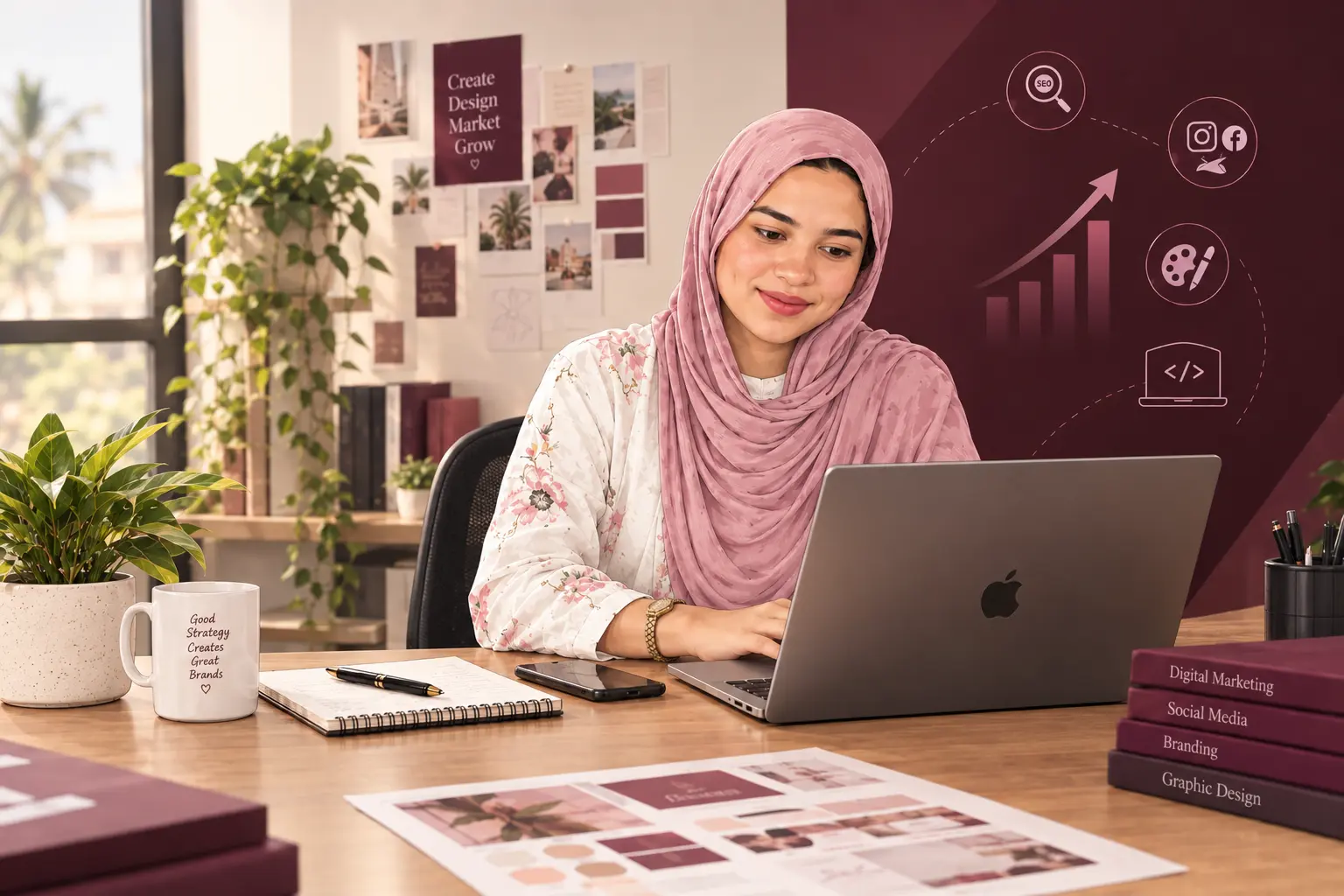
A lot of small business owners think hiring a graphic designer means getting a logo made once, and that’s the end of it. In reality, a graphic designer does far more than design a single image — they shape how your entire business looks, feels, and gets remembered across every touchpoint a customer has with you.
I’m Fathima Hana, a graphic designer and digital marketer, and this is a conversation I have with almost every new client: design isn’t a one-time task, it’s an ongoing part of how your brand communicates
What a Graphic Designer Actually Does
Builds Visual Consistency
A graphic designer makes sure your logo, social media posts, website, packaging, and marketing materials all look like they belong to the same brand. Without this, businesses often end up with a different “look” on every platform — which confuses customers and weakens recognition.
Translates Your Brand Into Something People Feel
Good design communicates things words can’t on their own — professionalism, trustworthiness, creativity, or affordability, depending on what your brand needs to convey. A skilled graphic designer chooses colors, fonts, and layouts deliberately to create that feeling, not just to look nice.
Makes Your Marketing Actually Work
An ad, a social media post, or a flyer with weak design gets scrolled past. The same message with strong design gets noticed, read, and acted on. A graphic designer doesn’t just make things pretty — they make your marketing more effective.
Saves You From Costly Redos
A logo or brand identity built without real design thinking behind it often needs to be redone within a year or two — once a business realizes it doesn’t scale, doesn’t look professional, or doesn’t match where the brand is heading. Getting it right the first time, with a proper design process, is almost always cheaper in the long run
Common Myths About Hiring a Graphic Designer
I can just use a free template or app.” Templates can work for very basic needs, but they’re used by thousands of other businesses too — meaning your brand ends up looking like everyone else’s. A graphic designer creates something built specifically around your business.
“Design is just about making things look nice.” Good design is about strategy as much as aesthetics — understanding your audience, your competitors, and what will actually make people trust and remember you.
“I only need a designer once, for my logo.” A logo is just the starting point. Your social media, website, packaging, and marketing materials all need design that’s consistent with that logo — which is an ongoing need, not a single project.
“Hiring a graphic designer is only for big companies.” Small businesses often benefit the most from strong design, since it’s one of the fastest ways to compete with larger, better-funded competitors on a limited budget.
What to Expect When Working With a Graphic Designer
A good graphic designer should start by understanding your business — not just jumping straight into designs. That typically means:
- Learning about your business, audience, and goals before any visual work begins
- Researching your competitors to make sure your brand stands apart rather than blending in
- Developing concepts, often with multiple directions to choose from rather than a single take-it-or-leave-it option
- Refining based on your feedback, since the first draft is rarely the final version
- Delivering usable files in the right formats for web, print, and social media — not just a single flattened image
Types of Design Every Business Should Think About
- Logo and brand identity — the foundation everything else builds on
- Social media graphics — templates and visuals that keep your feed consistent
- Website design elements — banners, icons, and layout visuals that match your brand
- Marketing materials — flyers, brochures, and ads that reflect your visual identity
- Packaging design — for product-based businesses, often the first physical touchpoint a customer has with your brand
The Real Cost of Skipping Professional Design
It’s tempting to think of design as an optional expense, something to get to “later” once the business is more established. In practice, the opposite is usually true. First impressions form in seconds, and a huge share of that judgment comes from how something looks — a social media post, a website, a product label, a flyer handed out at a local event. If that first impression feels amateurish or inconsistent, many potential customers never give the business a second look, no matter how good the product or service actually is behind it.
There’s also a compounding cost. A weak logo or inconsistent visual identity tends to get patched over time — a new font here, a different color scheme there — rather than fixed properly. Years later, businesses often realize their brand has drifted into something disjointed, and the cost of untangling and rebuilding it is far higher than it would have been to invest properly from the start. In that sense, skipping design work isn’t really saving money; it’s deferring a larger cost to a later, more disruptive moment.
One mistake businesses often make is treating design and marketing as separate, unrelated functions — hiring one person to run ads or manage social media, and a completely different person (or no one at all) to handle visuals. The problem is that marketing and design are deeply connected. A campaign built around a sharp strategic insight can still underperform if the visuals supporting it look generic or inconsistent with the rest of the brand. Likewise, beautiful design with no strategy behind it rarely drives real business results on its own.
The strongest outcomes tend to come from treating these as one connected process — where the messaging, targeting, and strategy of a campaign are built alongside the visuals from the very beginning, rather than design being an afterthought bolted on at the end. This is part of why many small businesses now look for someone who can handle both, rather than coordinating between two separate people with two separate priorities.
How to Choose the Right Graphic Designer
- Look at their process, not just their portfolio. A strong process usually means better, more strategic results than a designer who jumps straight to a finished file.
- Make sure they ask about your business first. A designer who skips straight to visuals without understanding your goals is more likely to produce something generic.
- Check that they deliver proper file formats. You should walk away with usable files for web, print, and social media — not just one low-resolution image.
- Look for consistency across their past work. A good graphic designer should be able to show a range of projects that each feel intentional and well thought out, not just visually similar to each other.
Final Thought
Hiring a graphic designer isn’t an expense you make once and forget about — it’s an ongoing investment in how your business is perceived every single time a customer sees it. Whether it’s a logo, your social media presence, or your marketing materials, strong design consistently pays for itself by making your brand more memorable, more trustworthy, and more competitive.
If you’re ready to build a brand identity that actually works for your business, I’d love to help.
Get in touch on WhatsApp for a free consultation, or reach out through the contact form on my website.
Fathima Hana is a graphic designer and digital marketer based in Kerala, helping small businesses build consistent, professional brand identities.